Beyond the River—or Turn Back?
No sign-up · Read the full story free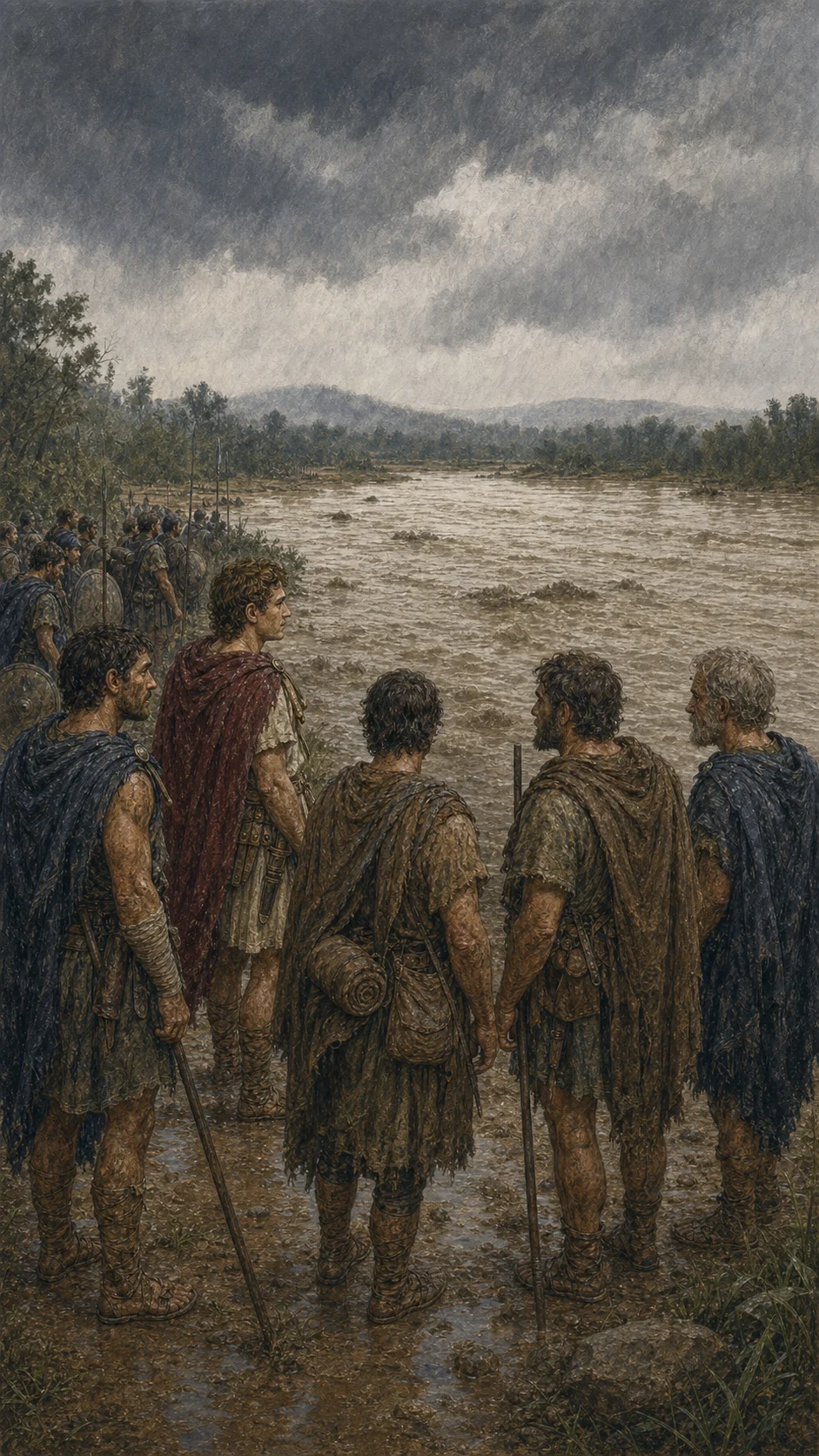
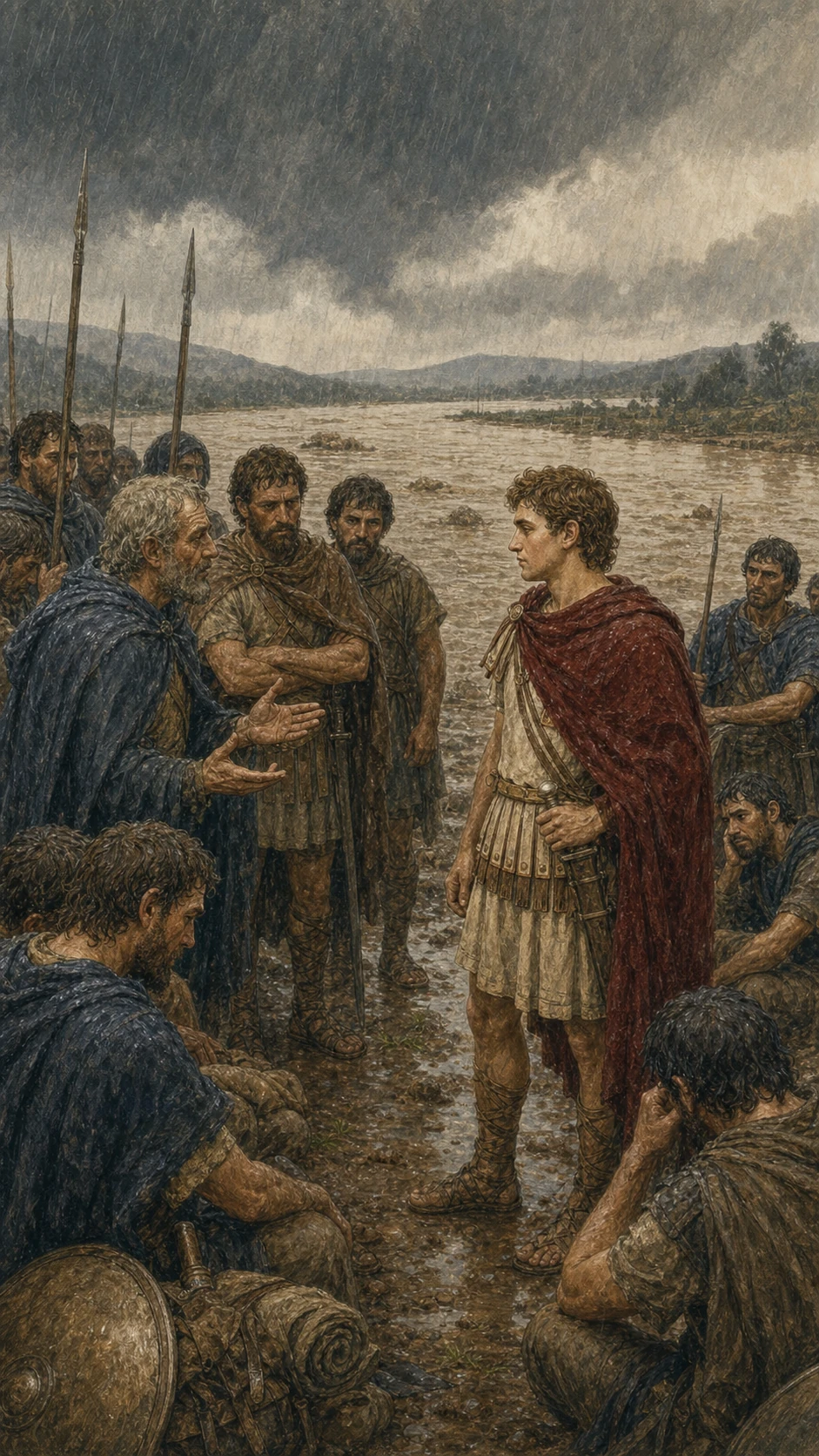
In 326 BCE, Alexander the Great's expedition reached the Hyphasis River in what is now northwestern India. Today it is called the Beas. Eight years had passed since the eastern campaign began in 334 BCE. Soldiers had crossed mountains and rivers and endured years of marching and fighting, now in monsoon rain.
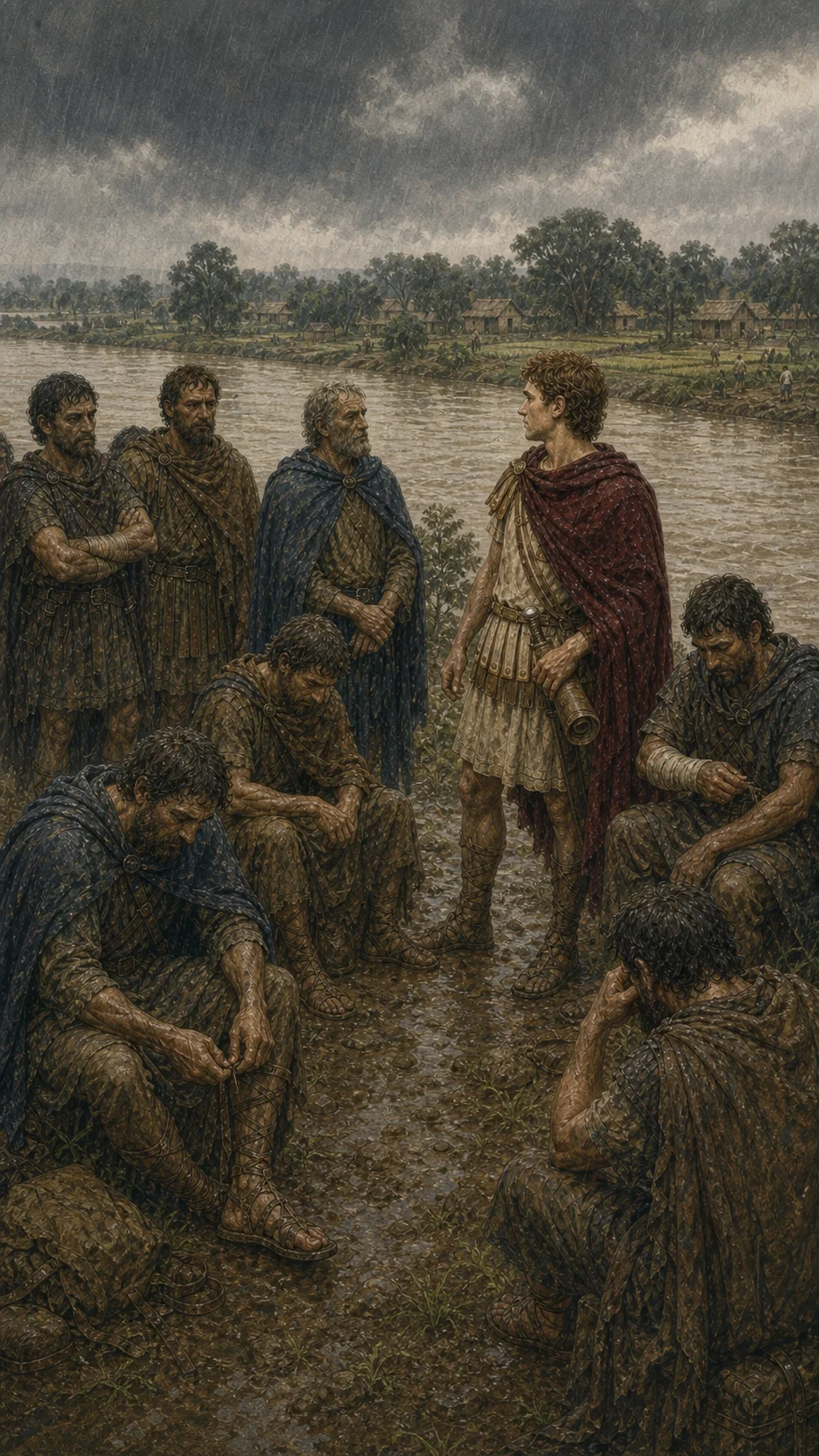
Around age thirty, Alexander had defeated the Persian Empire and extended his rule from Egypt through Central Asia to northwestern India. He wanted to continue east. Writing about 450 years later, Arrian says the king argued that turning back could invite revolts in conquered regions and undo what the army had struggled to achieve.
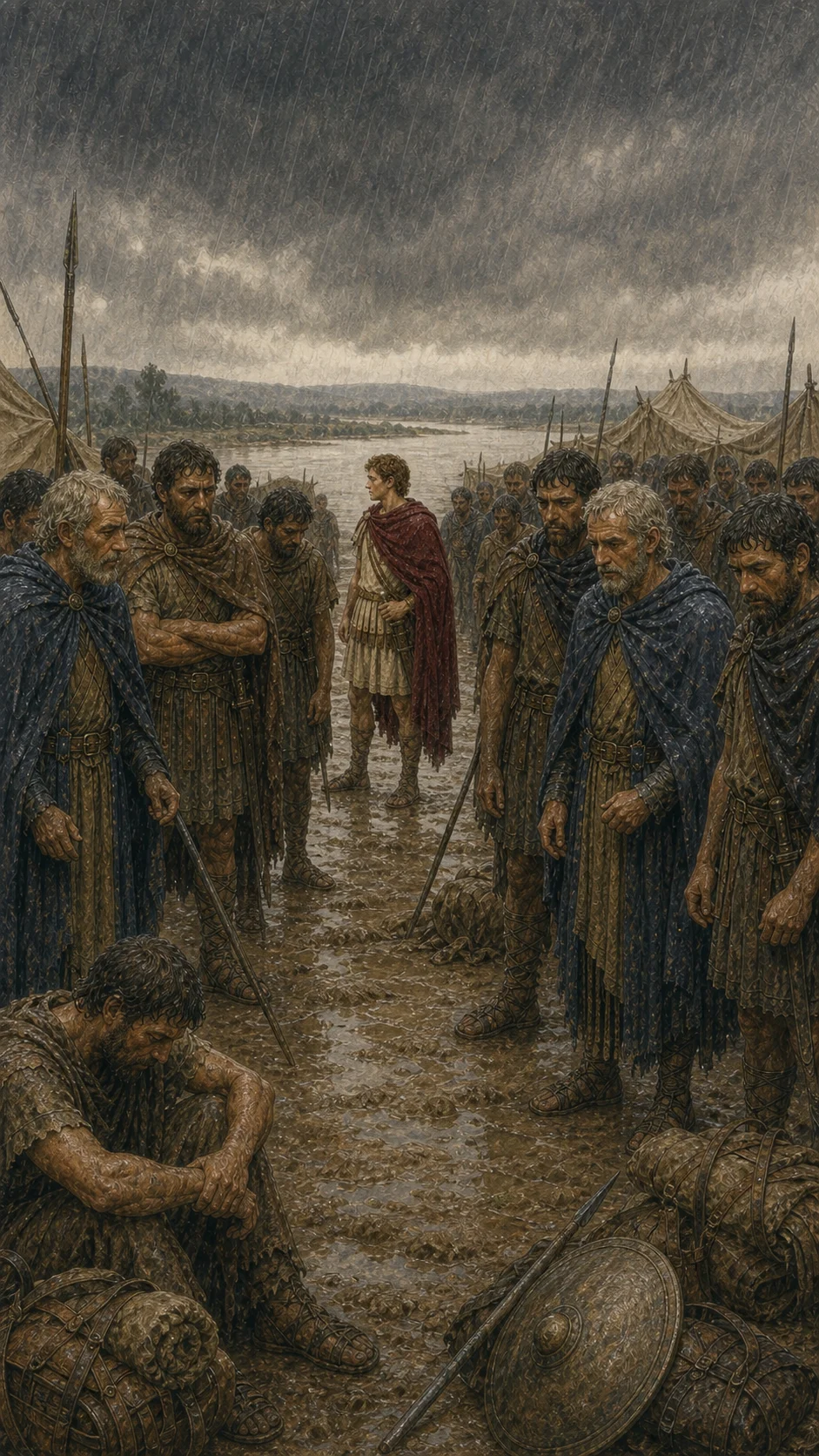
Some soldiers had joined near the campaign's beginning and had been away from home for almost eight years. Companions had died, been wounded, or been left to guard distant towns. Across the camp, soldiers said they could go no farther and continued refusing the march. Reports spoke of a huge army and war elephants beyond the river, though their numbers cannot be verified.
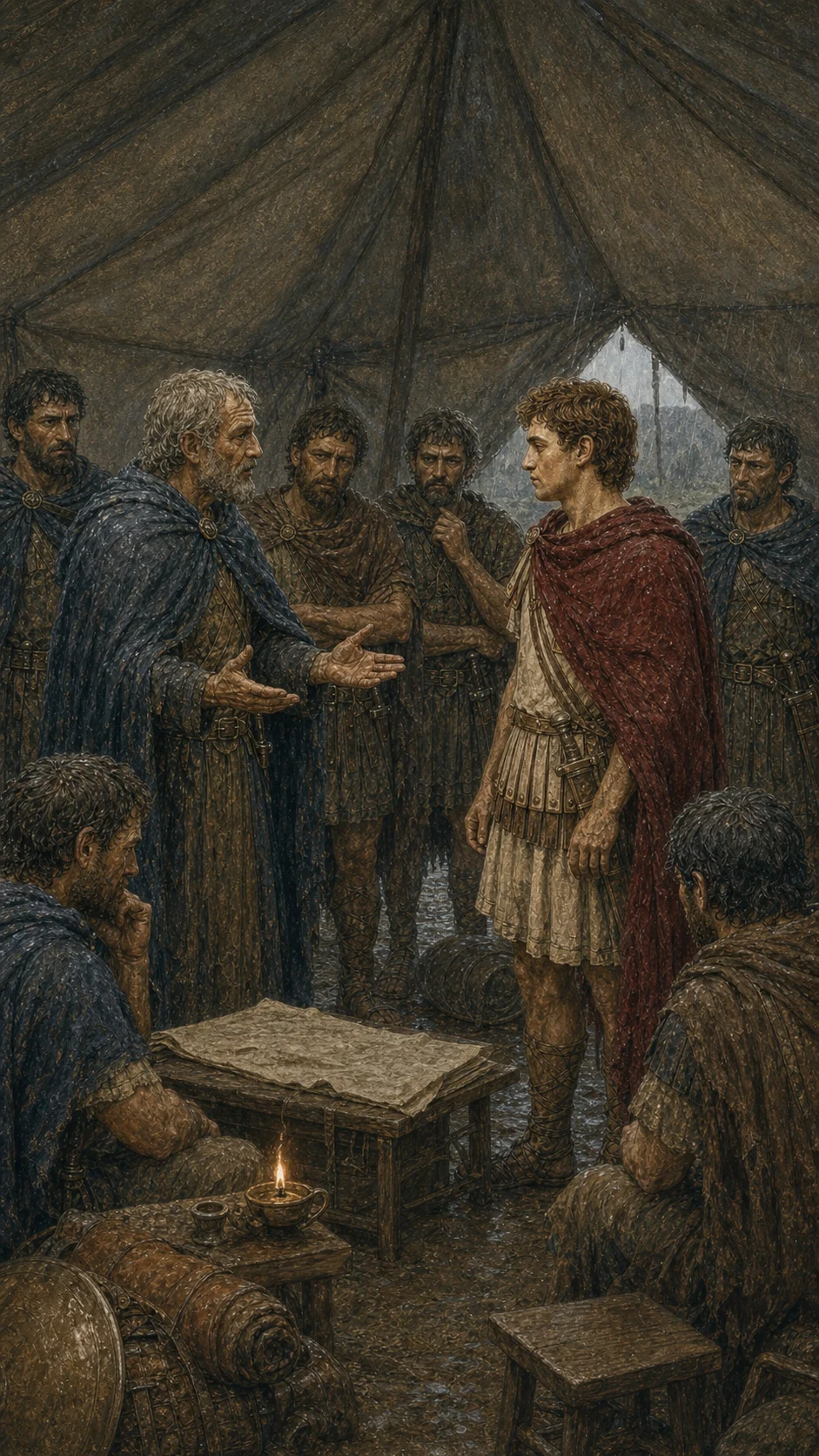
When Alexander urged his commanders to continue east, no one answered at first. Then Coenus argued that it was time to rest those who had fought for so long and let them return home. Other commanders supported him. The speech comes from Arrian, who was not there and wrote about 450 years later; it is not a word-for-word record.
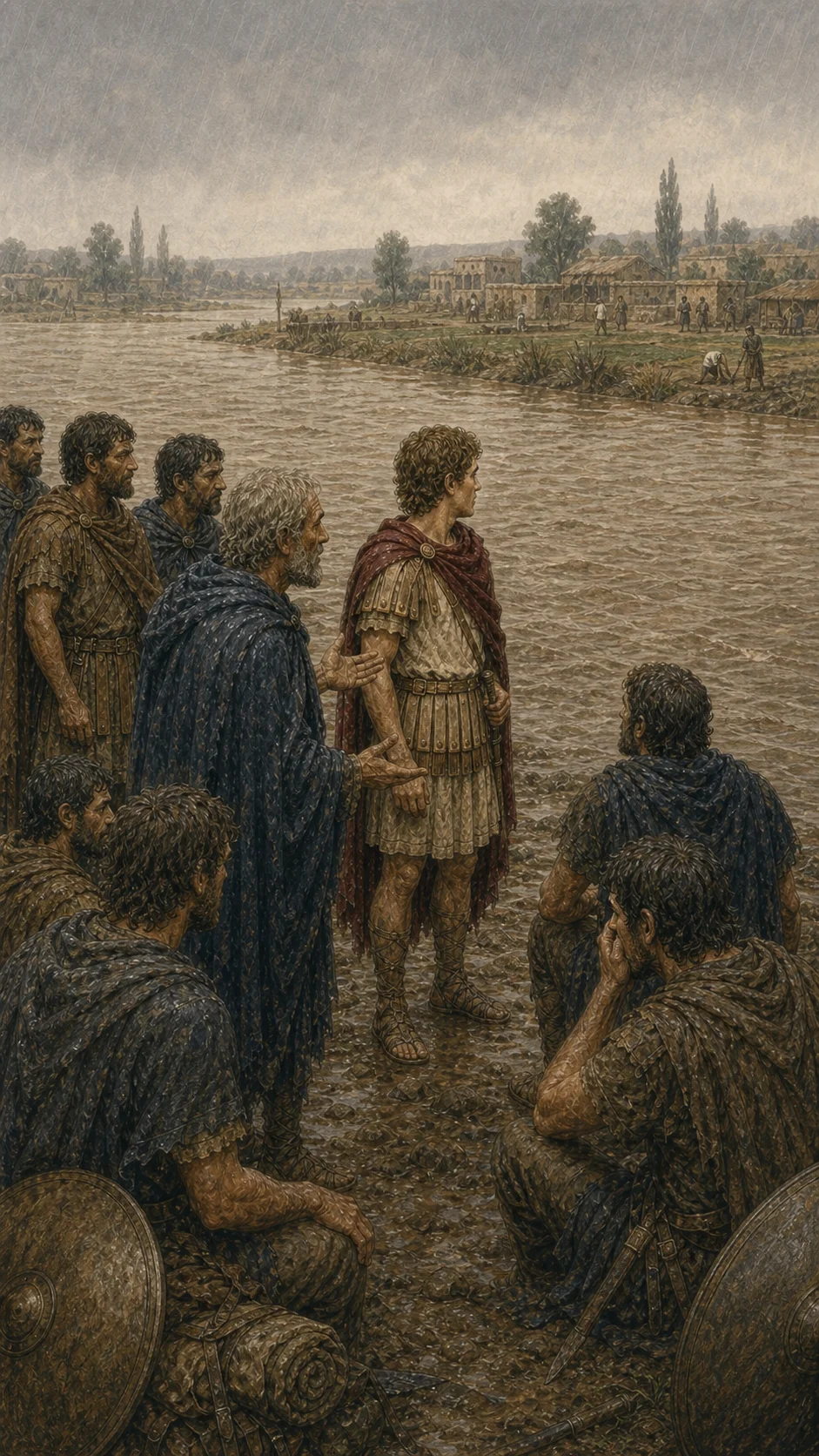
Marching east might answer the king's fear of revolt and continue the campaign's plan. But it would mean ordering unwilling soldiers onward and drawing people beyond the river into more war. Turning back would give greater weight to the soldiers' will and lives, though the road home was not safe. Which path has the stronger reasons? Use one clue from the story.
Before revealing the ending, ask your child: “Which path has the stronger reasons? Use one clue from the story.”
Tap to choose
After the story ends
Connect names and dates through maps and reasons.
This series goes beyond memorizing famous people and achievements. Families examine maps, timelines, the distance between an event and its sources, and the effects of a decision—then talk about why it mattered.
The words and pictures in this story were made using AI.
Lumisia Stories — Serial picture books to open together, in English and Japanese. · Operated by EISOL LLC (Tokyo)