
Water Lilies at the End of a Long Journey
Episode 1 is free to the endClaude Monet, Water Lilies, 1916. Nearly two metres high and wide, it fills the canvas with water while leaving out both shore and sky. The painting now seen in Tokyo did not arrive in Japan soon after it was made. From the artist's garden, it began a long journey across war and borders.
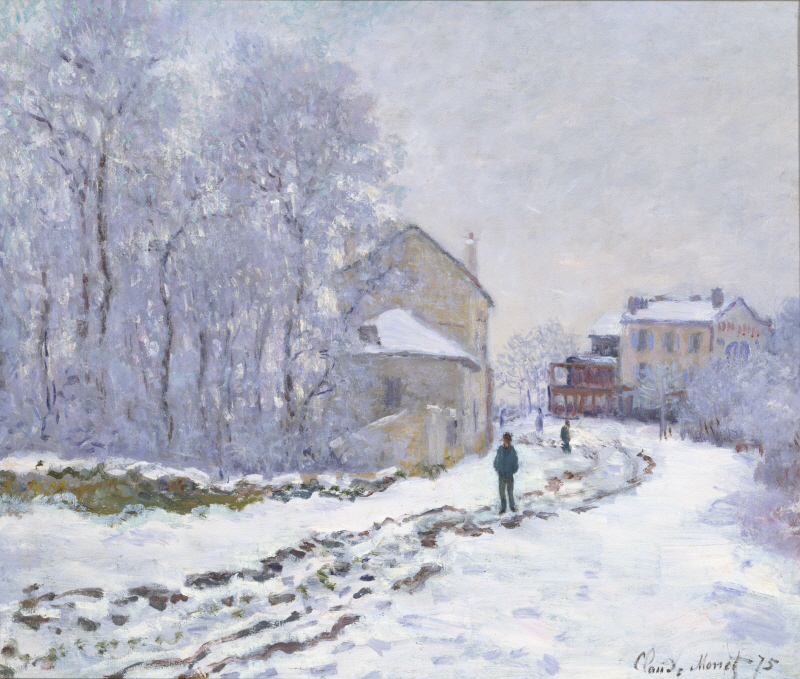
Rewind to 1875: Snow in Argenteuil. Snow that should be white carries blue, violet, grey and touches of green. Instead of painting the idea that snow is white, Monet placed the colours visible at that moment. His work begins with the precision of looking.
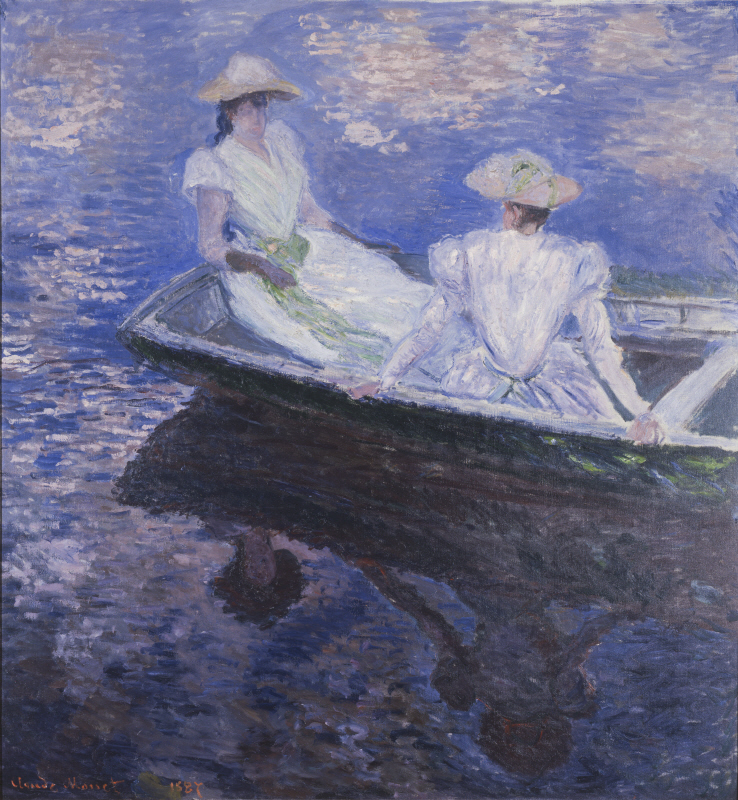
On the Boat, 1887. Water and the boat's reflection occupy more of the canvas than the two dresses. Faces are not explained in detail; figures and boat sit inside a shifting reflection. The subject is not only who is aboard, but how the water changed that moment.
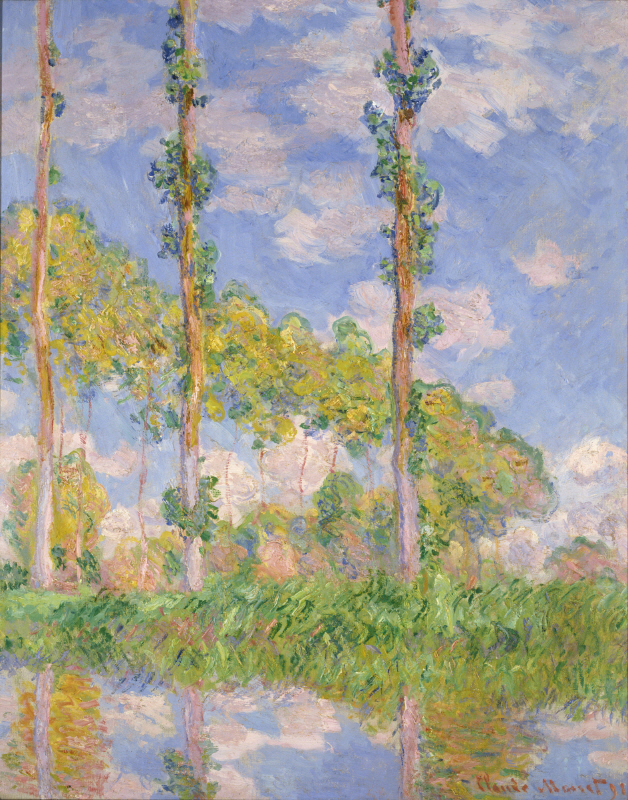
Poplars in the Sun, 1891. Slender trunks extend beyond the canvas while another image trembles in the water below. Rather than copy one tree exactly, the painting catches a place where light, wind and water move together. Monet's attention shifts from outlines toward change itself.
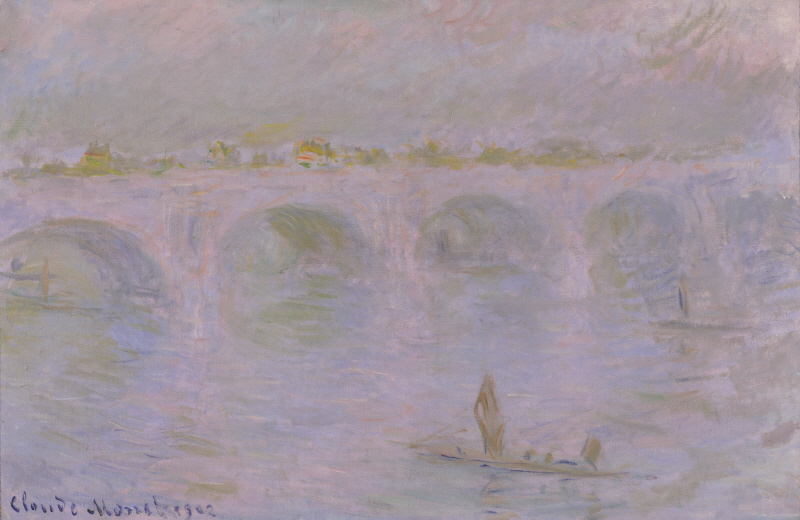
Waterloo Bridge in London, 1902. The bridge is certainly there, yet its outline dissolves into coloured fog, and the border between river and sky is uncertain. Difficulty seeing was not a reason not to paint; the difficulty itself could be painted. For Monet, landscape was an event made of light and air, not an inventory of objects.
After turning fifty, Monet built a garden at his home in Giverny and cultivated water lilies in its pond. By 1916, when he made this Water Lilies, he had painted them for nearly twenty years. Looking for so long did not produce the same picture. Weather and time continually changed the water, presenting a new problem each time he looked.
Around 1921, industrialist and collector Kojiro Matsukata bought this painting from Monet himself. The work remained in France and was sequestered by the French government in 1944. It vested in France under the 1952 peace treaty, was transferred to the Japanese government in January 1959, and entered the National Museum of Western Art that April.
Before a painting lies the time its maker spent seeing. Behind it lie the collector, the people who cared for it, negotiations between nations, and the time we spend looking now. Water Lilies shows a quiet surface, but its provenance is anything but still. What do you see more strongly now than on the first page?
Artwork information & image sources
Authentic works, with their sources
- Image source: Integrated Collections Database of the National Museum of Art, Japan (works held by the National Museum of Western Art, Tokyo). Source files are unaltered; responsive layouts may scale or partially crop their display.
- Snow in Argenteuil, 1875: https://search.artmuseums.go.jp/records.php?sakuhin=100283
- On the Boat, 1887: https://search.artmuseums.go.jp/records.php?sakuhin=100285
- Poplars in the Sun, 1891: https://search.artmuseums.go.jp/records.php?sakuhin=100287
- Waterloo Bridge in London, 1902: https://search.artmuseums.go.jp/records.php?sakuhin=100290
- Water Lilies, 1916: https://search.artmuseums.go.jp/records.php?sakuhin=100292
- Artwork notes and provenance: https://collection.nmwa.go.jp/P.1959-0151.html
- Late work, Grandes Décorations and Kojiro Matsukata: https://www.nmwa.go.jp/jp/exhibitions/2024monet.html
- Rights statement: No Copyright – Contractual Restrictions. Terms: https://search.artmuseums.go.jp/terms.html
After looking
This is not a quiz. Look at the work once more and share one thing that now appears differently.
Choose one question for tonight and keep it as a conversation bookmark.
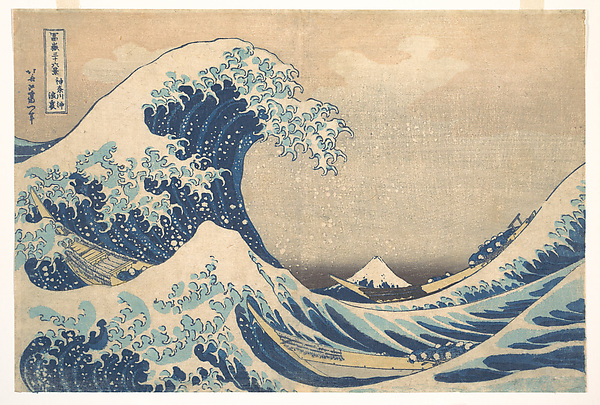
Next artist: Hokusai
A small Fuji waits beyond the wave
Episode 2 is Katsushika Hokusai. Move among four views of Fuji to see how viewpoint, time, weather and human motion remake a world. It is a member episode designed to reward adults reading alone or with family.
The pictures are public-domain masterpieces. The words were made using AI. The music was also made using AI.
Lumisia Stories — Serial picture books to open together, in English and Japanese. · Operated by EISOL LLC (Tokyo)