Where Does Used Water Go?
No sign-up · Episode 1 is completely free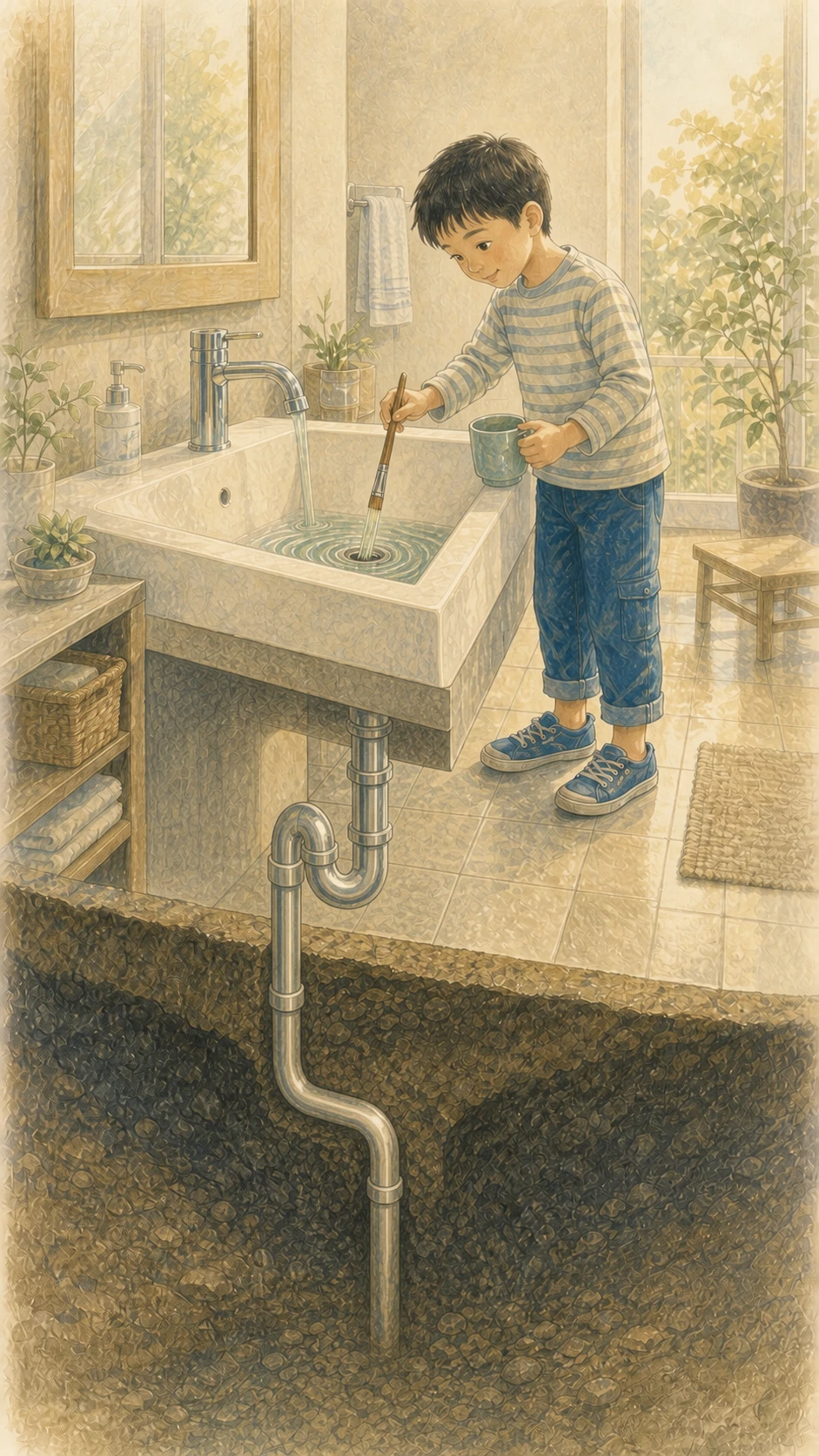
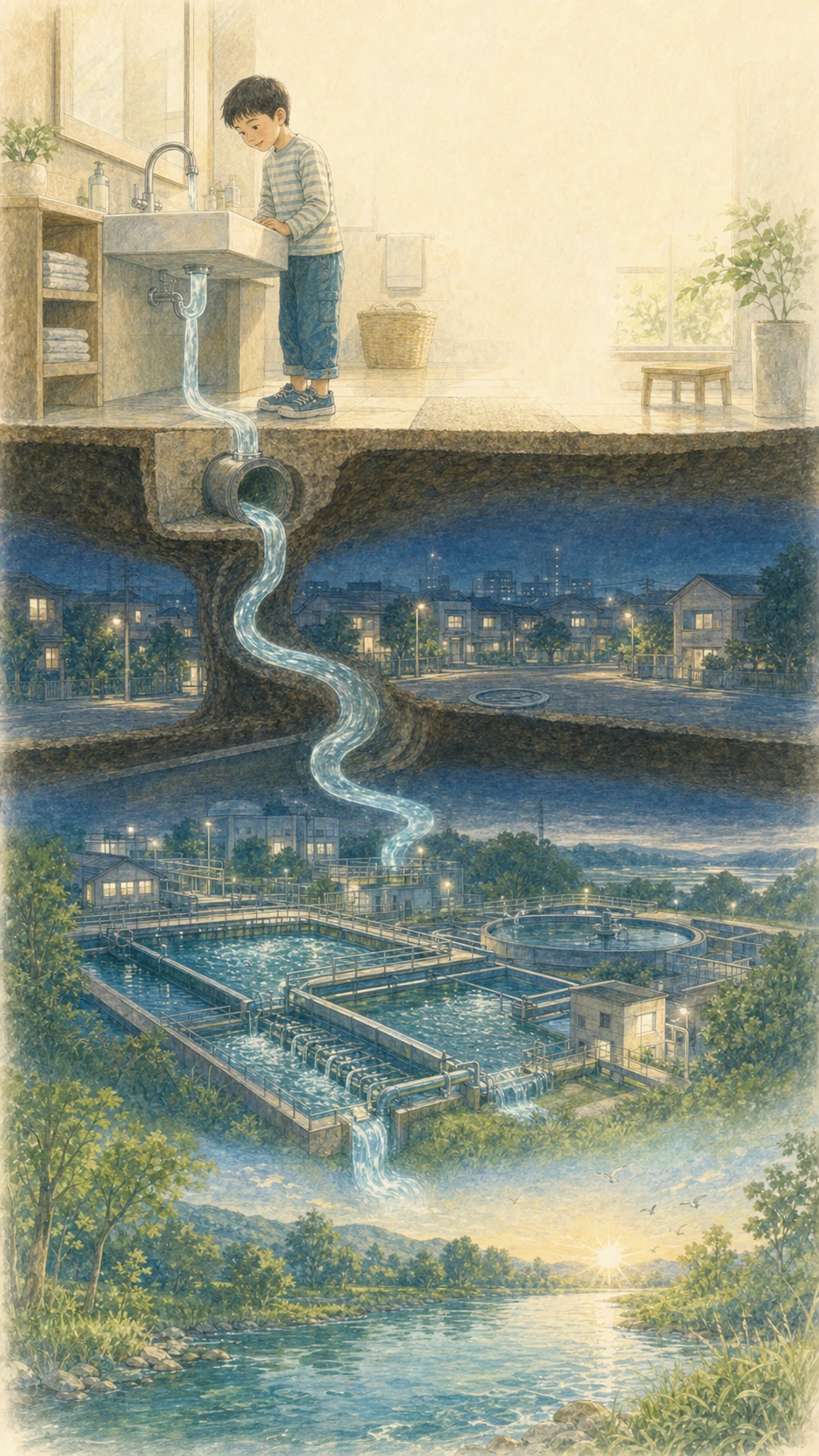
Painty water spirals down the sink and disappears. Goodbye? Not at all—this drop's journey is just beginning. Beneath the floor lies a path for water that we rarely see. Who helps return it to a river, and how? Let us look beneath the city together.
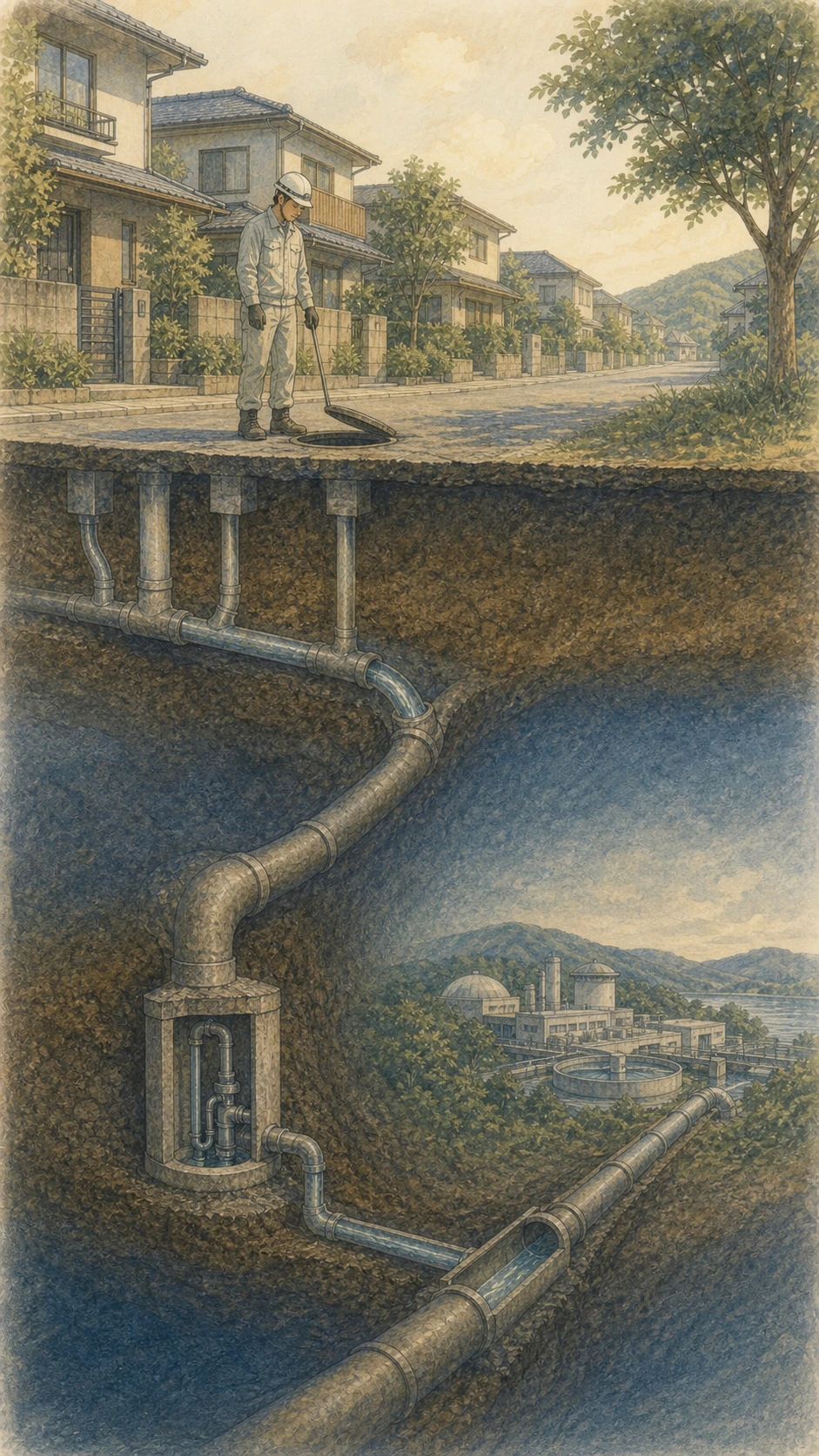
Below the drain, household water enters a sewer. Water from kitchens, baths, and toilets joins it beneath the road. In many places, sloping pipes keep it moving, while pumps lift it where the route grows deep, carrying it toward a water reclamation center—another river beneath the map.
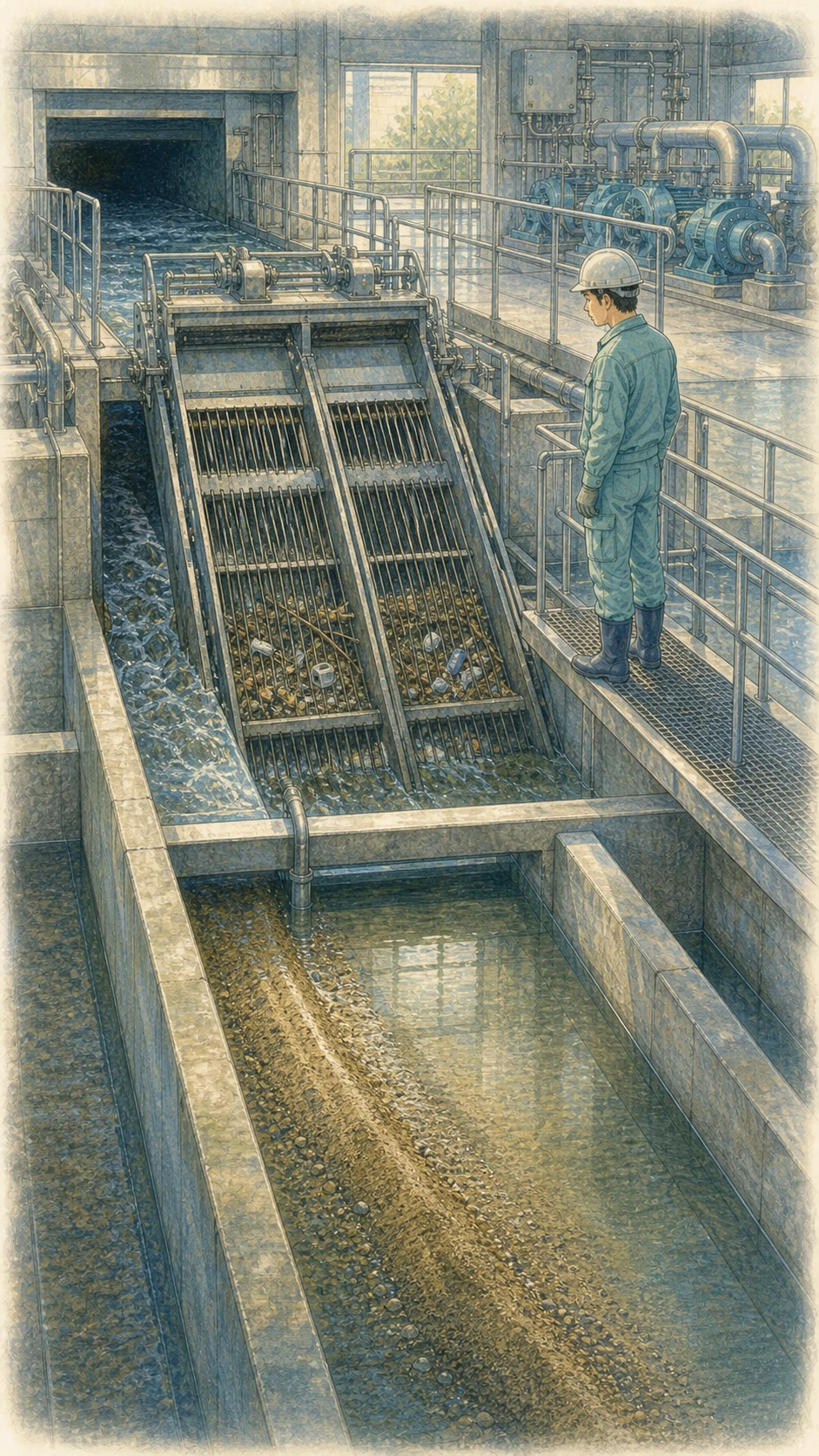
At the reclamation center, a first gate is waiting. Bar screens catch large debris, and a slower basin lets heavy grit settle. Not everything has dissolved in the water. Removing it here helps protect the pumps and pools that come next. This is the work that guards the entrance to the journey.
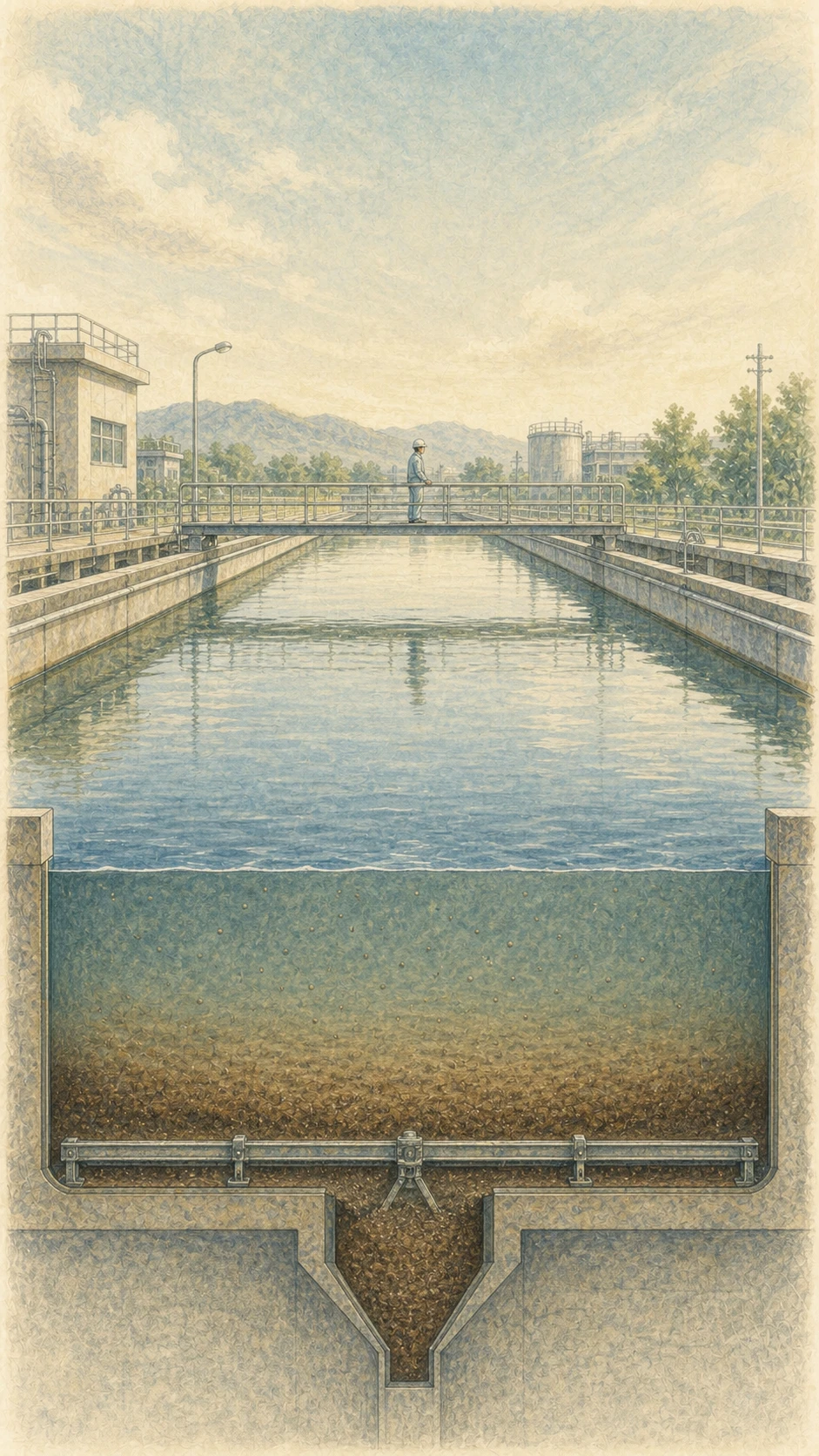
Next comes an enormous, quiet pool. As the water moves slowly, some of the fine solids settle to the bottom. Machinery gathers the sludge and sends it to separate treatment. Faster does not mean cleaner; waiting is an important technology here. Yet invisible pollution still remains in the water.
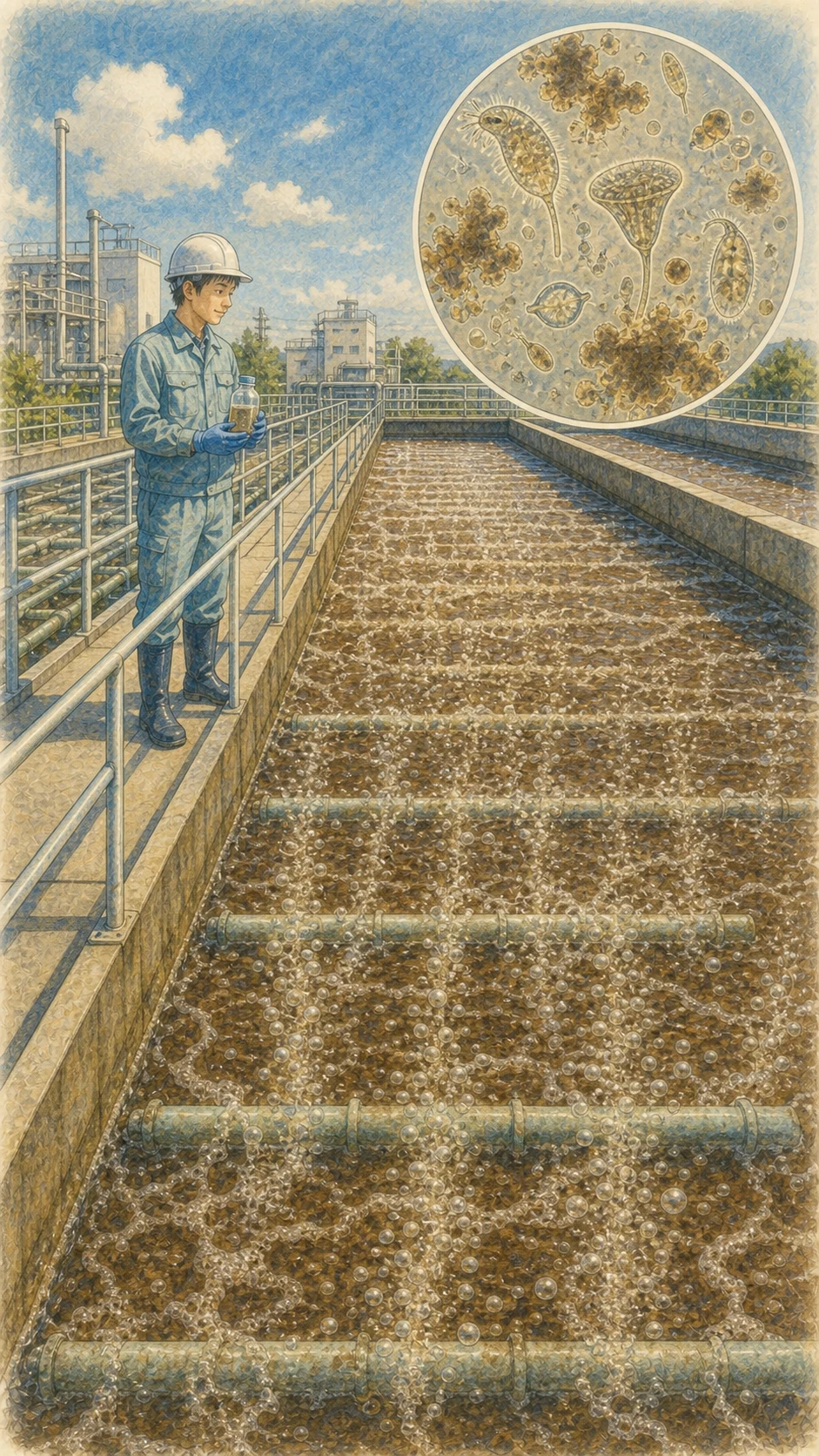
Now the smallest workers appear—living things too tiny to see. In a reaction tank, water is mixed with sludge containing microorganisms while air bubbles up from below. The organisms break down organic matter and help fine pollution gather into clumps that can settle. Tiny lives are working inside the city's giant machinery.
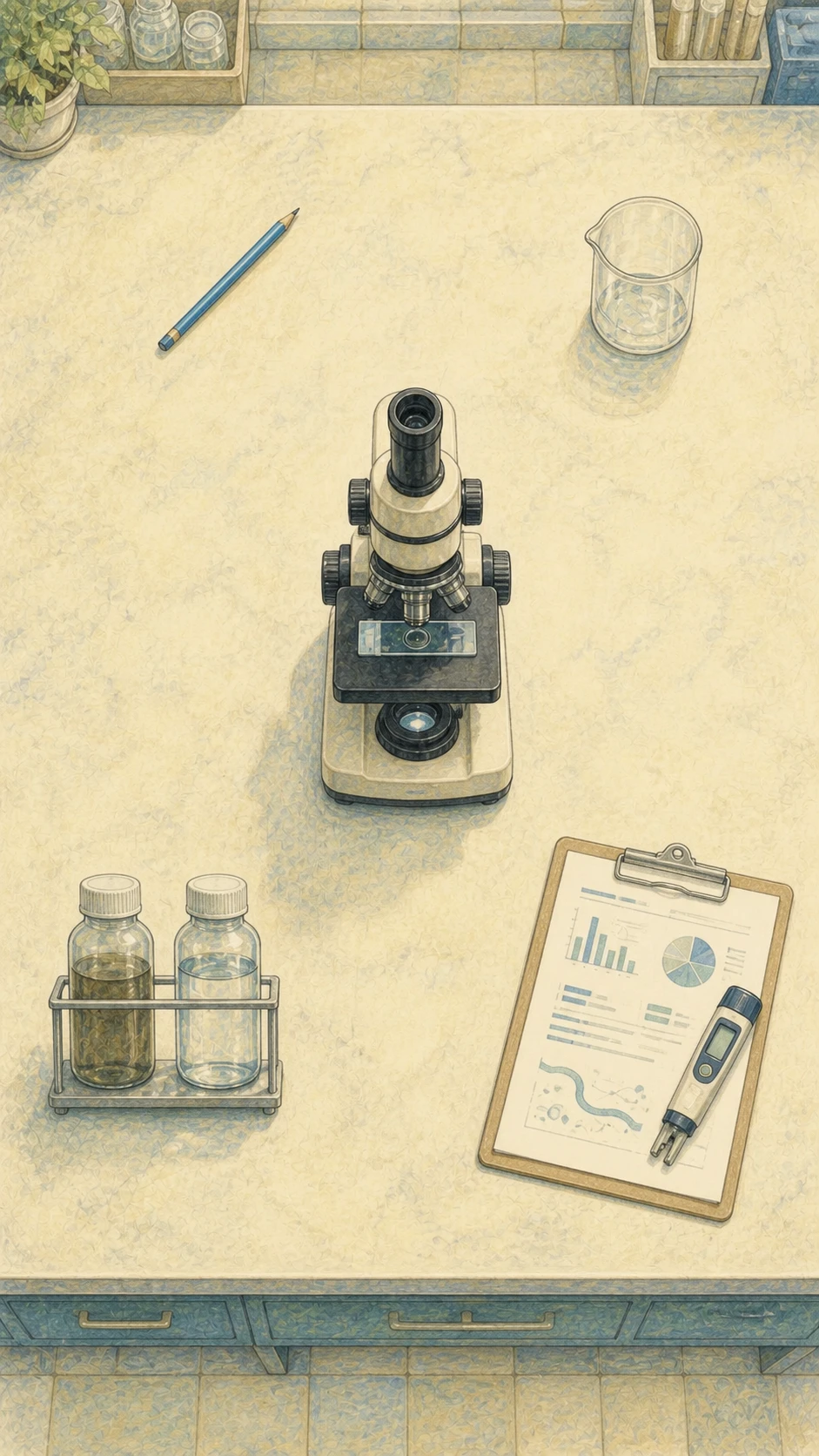
Find the three clues that show how the water has changed 3 to go
This is the water reporting desk. At a reclamation center, workers test whether the water is improving and inspect microorganisms through a microscope. Looking clearer is not enough. Find three clues—the incoming and outgoing water samples, the microscope, and the test record—and ask what must be checked beyond appearance.
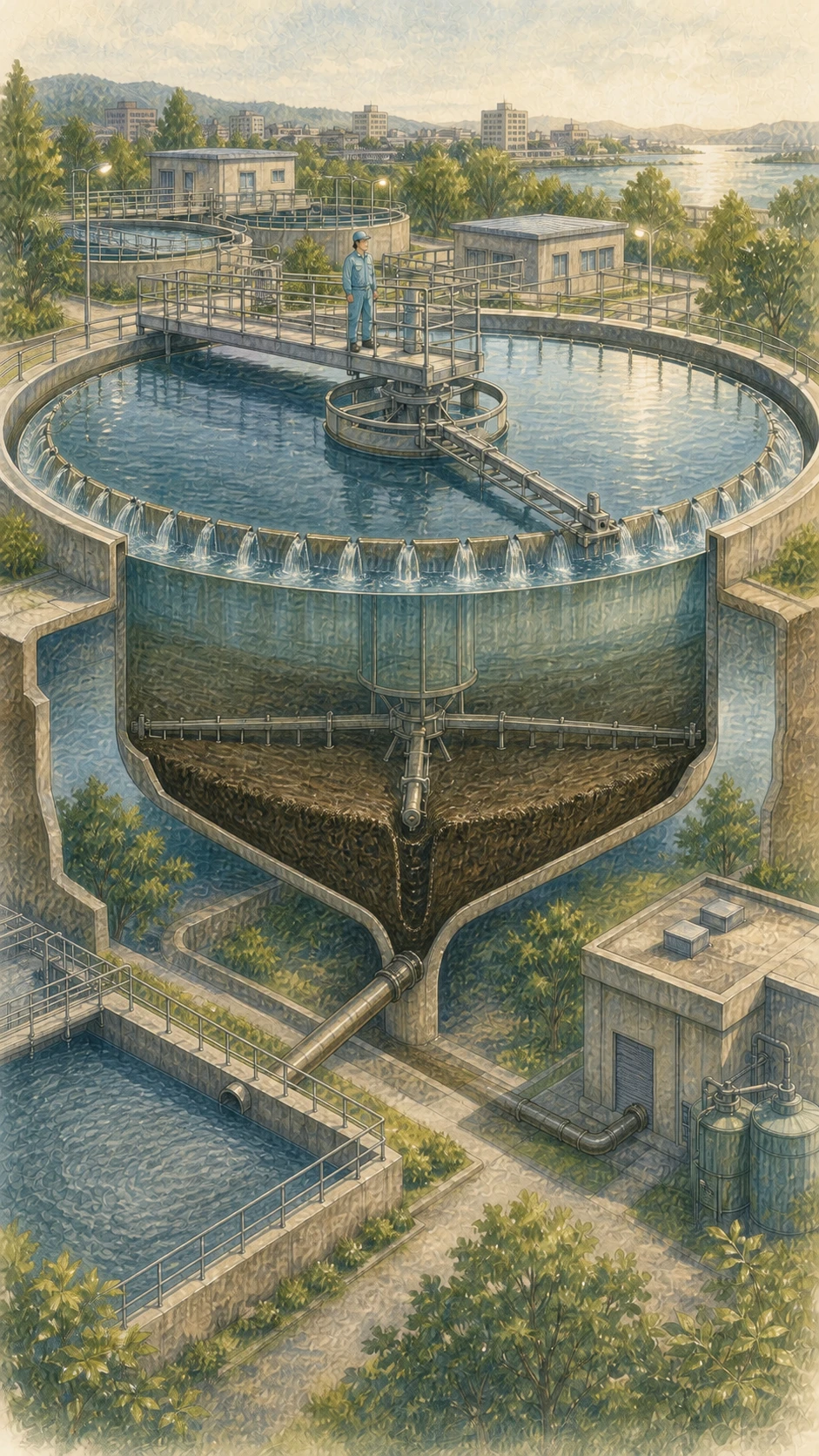
The clumps gathered by microorganisms are slowly settled in another large pool. Clearer water remains above and activated sludge below. Some of the settled sludge—and its working organisms—returns to the reaction tank; the rest receives separate treatment. Water moves onward while useful sludge loops back: a hidden cycle inside the plant.
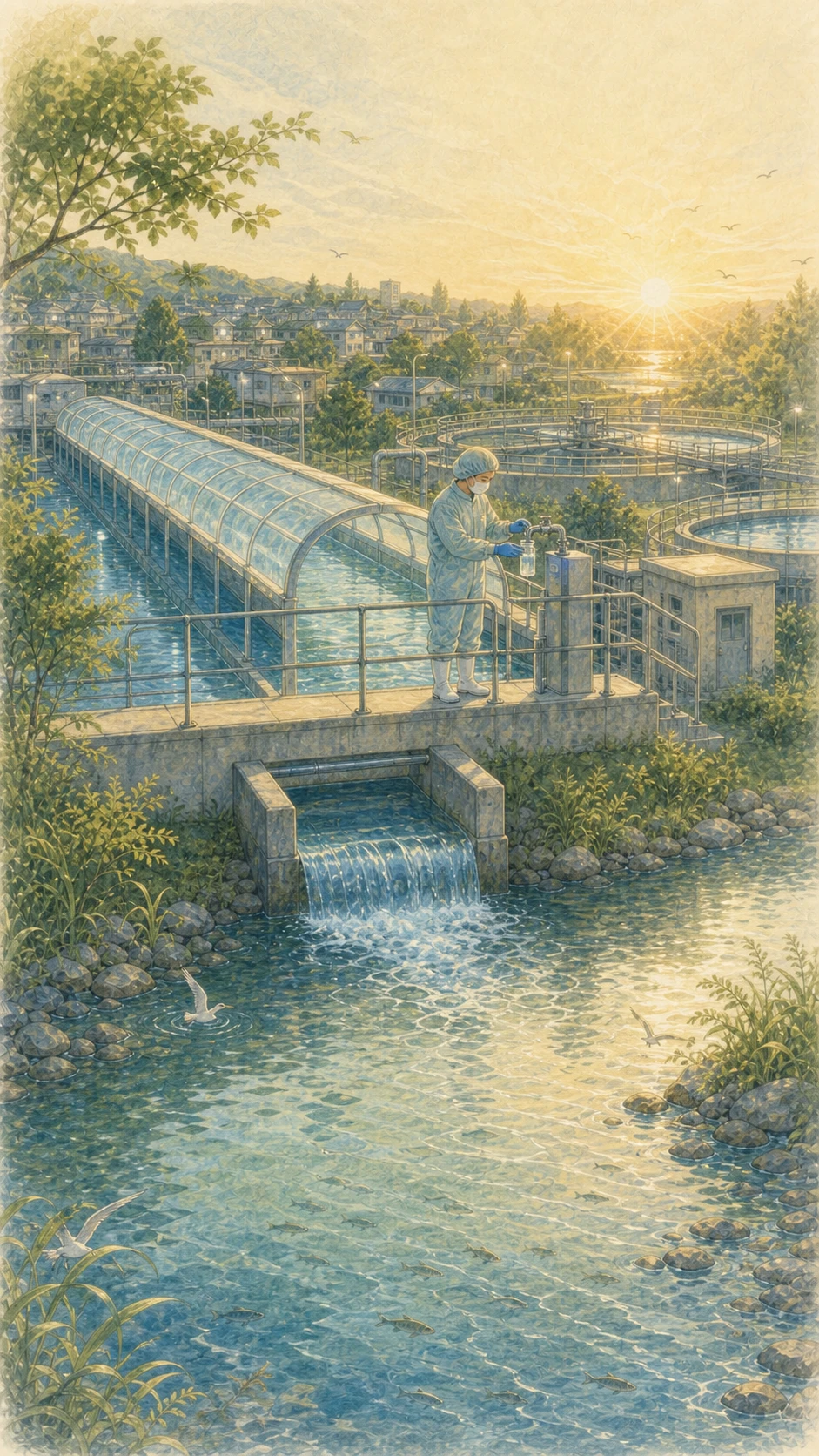
Finally, the treated water is disinfected, its quality is checked, and it is released to a river or the sea. It does not go straight back to a household tap as drinking water. Yet rivers and seas are not bins outside the city. Our drop returns to the wider water world through machines, human records, and the work of microorganisms.
After reading · Water reporting notebook 1
Five Jobs Behind the River Underfoot
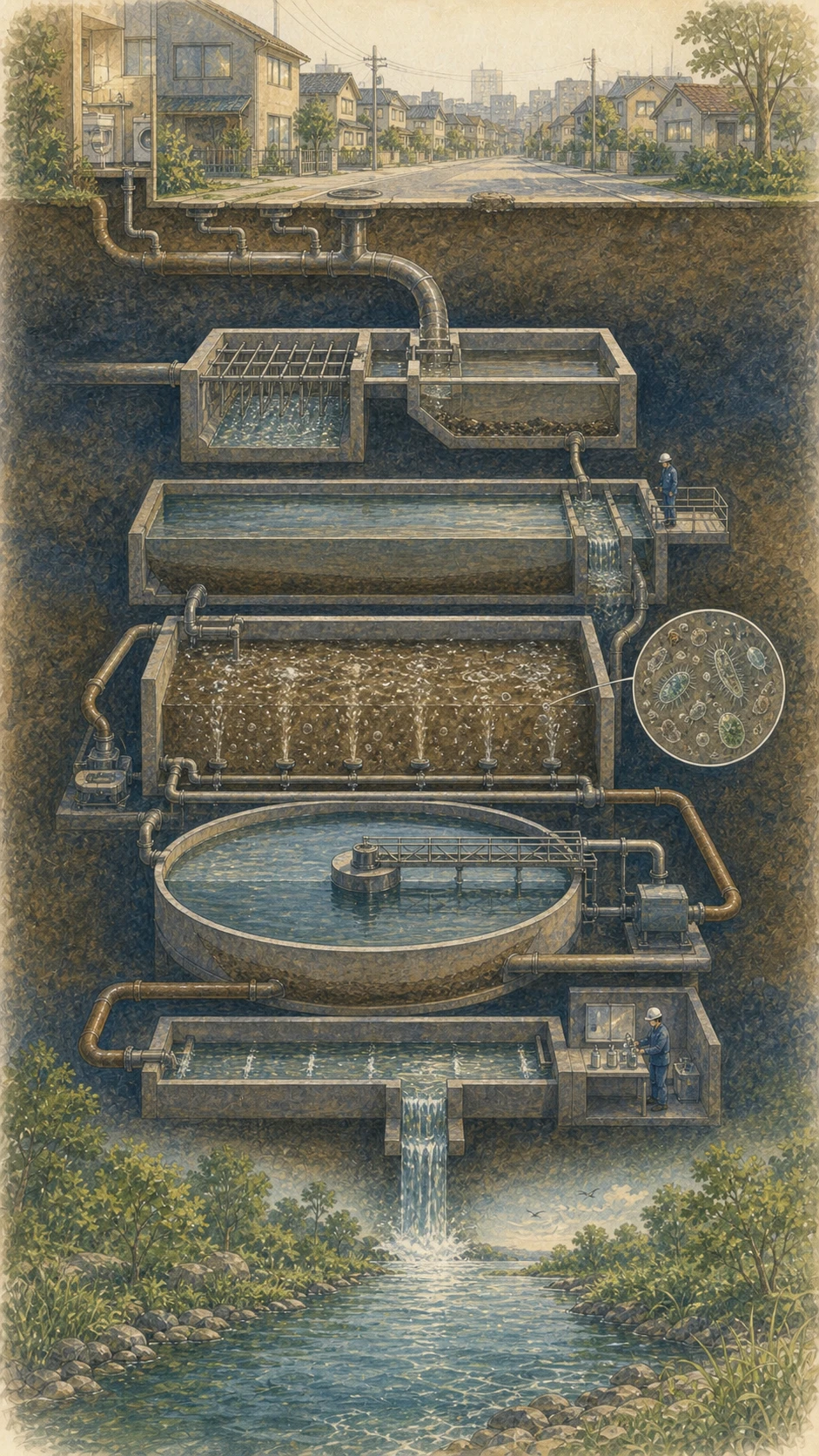
- Carry used water to a reclamation center through sewers and pumps
- Remove large debris and grit, then settle out heavier pollution
- Mix air and activated sludge so microorganisms can break down organic matter
- Settle the sludge again, disinfect and test the water, then return it to a river or the sea
This illustrated documentary reconstructs common processes in a public-sewer area and a water reclamation center using a standard activated-sludge process, based on sources from Japan's Ministry of Land, Infrastructure, Transport and Tourism and local governments. It is not a photographic record of one facility. Collection and treatment vary by region, plant, and weather; some areas use combined-treatment septic tanks or other systems instead of public sewers. Treated wastewater is not drinking water and does not return directly to household taps.
Only half of water's journey
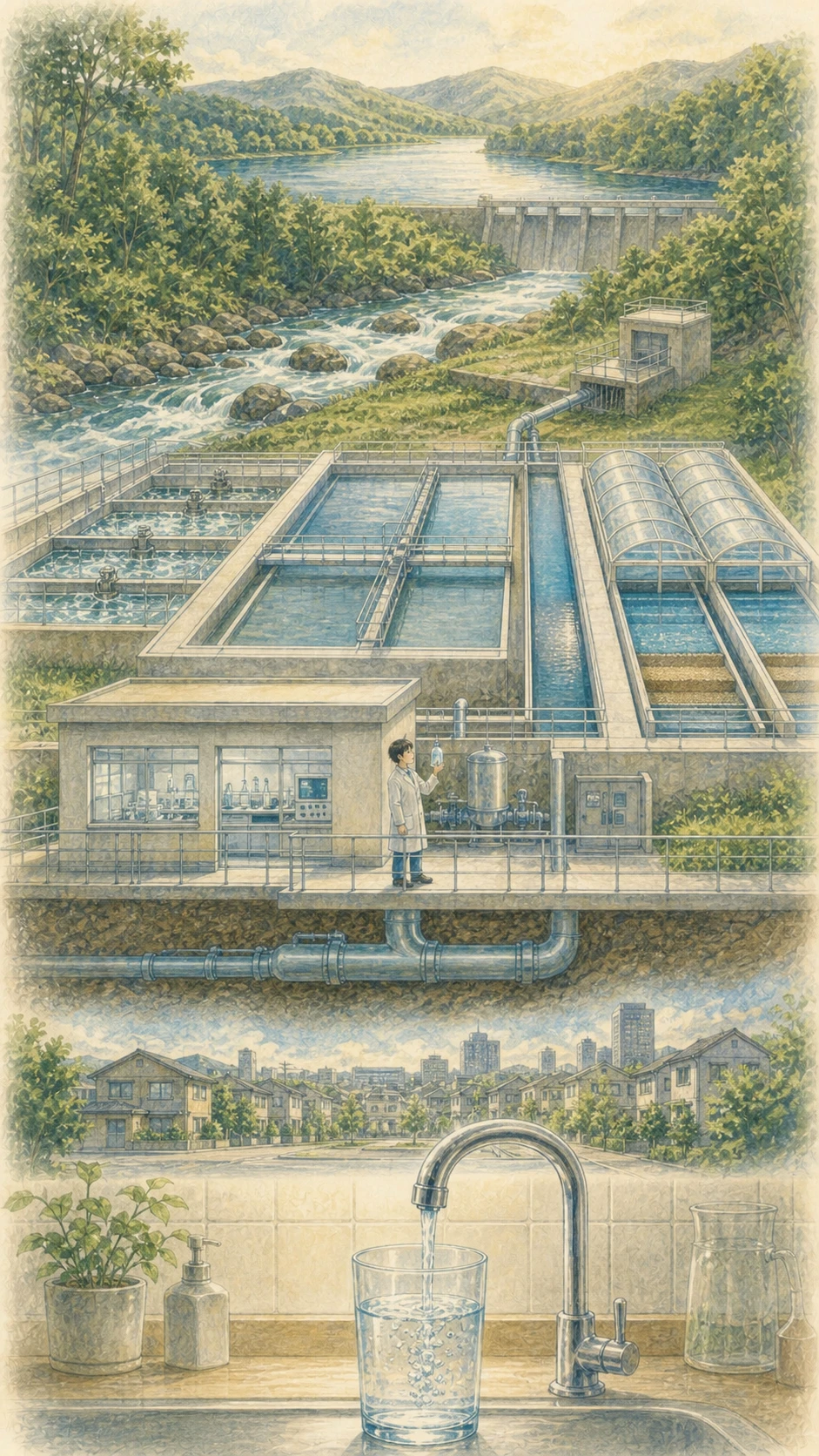
Next, follow tap water in the other direction.
Following water after use revealed how underground pipes, microorganisms, and test records support the city. Episode 2 reverses direction, tracing a common route from rivers or reservoirs through a drinking-water treatment plant to taps around town. Together, the two episodes connect water before and after use for families.