Six Dots for Our Words
No sign-up · Read the full story free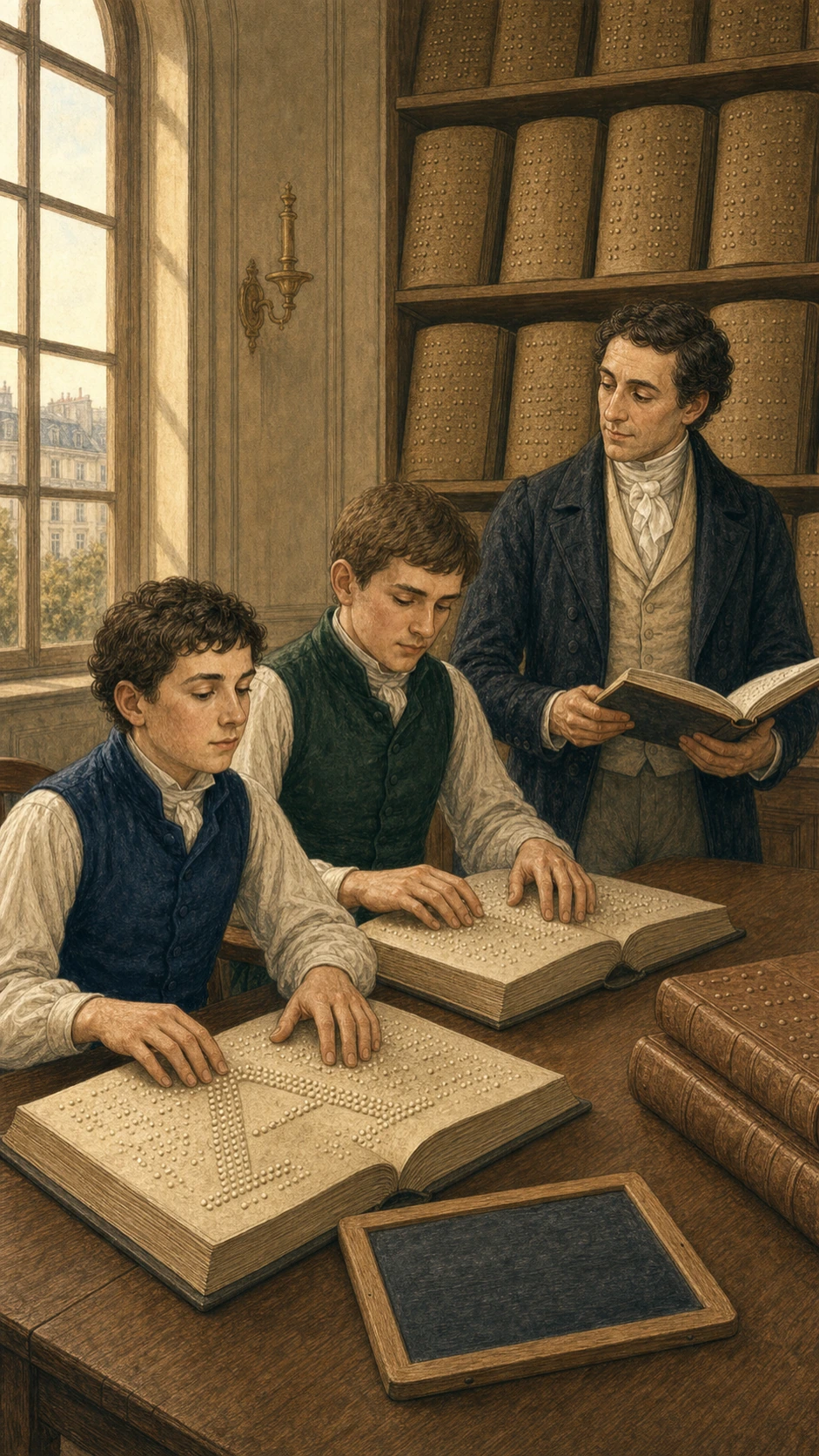
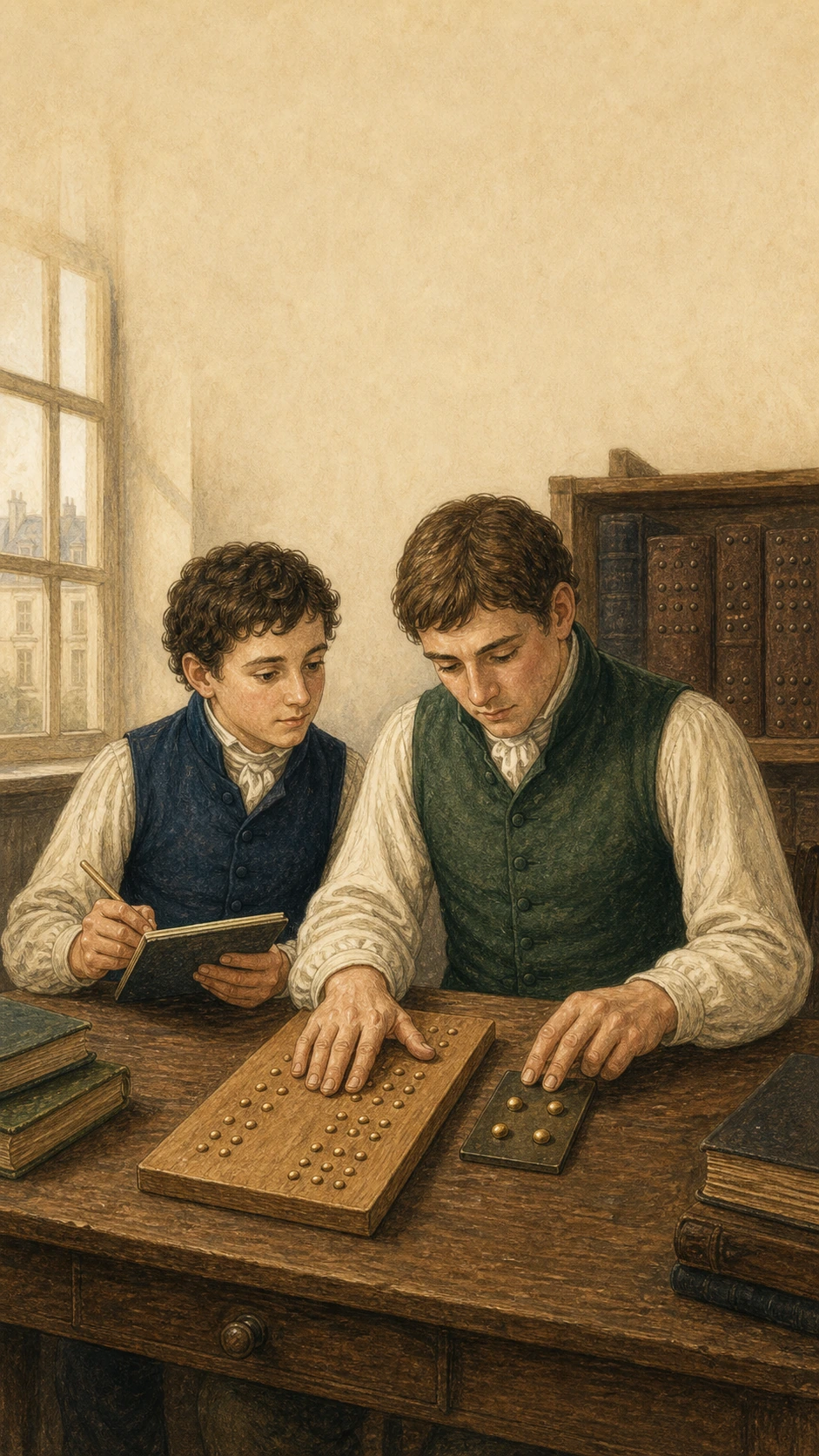
Paris, 1821. Twelve-year-old Louis Braille studied at a school for blind children. To read, students traced large raised letters on paper. Each letter took time, and only a few books existed. The same method did not let them easily write their own words. “I want to read. I want to write for myself.” Louis was not the only student with that wish.
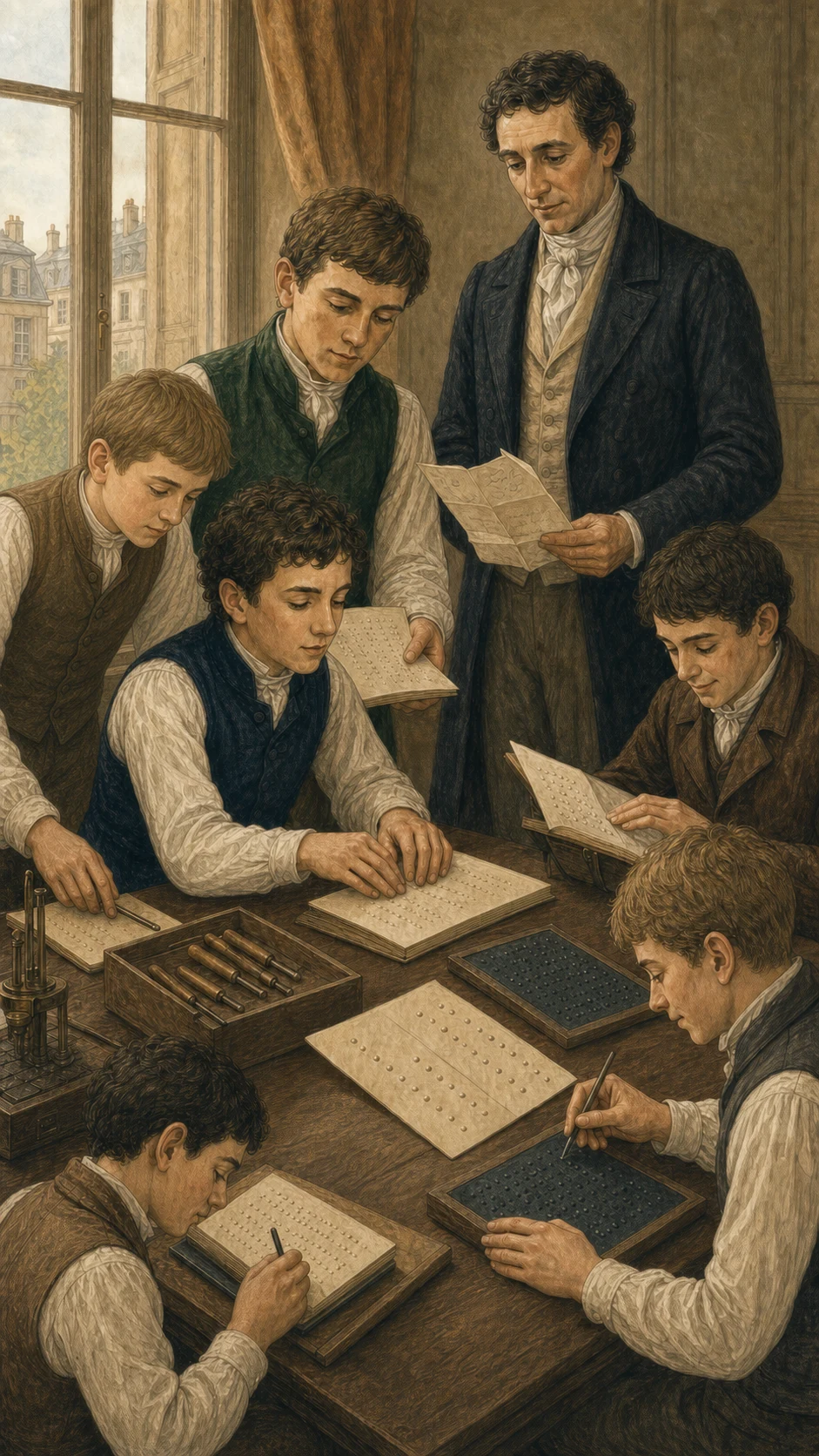
In 1821, the school tried a dot-writing method devised for blind people by former army officer Charles Barbier. It arranged up to twelve raised dots in two columns to represent letters. By punching dots from the back of the paper, students could write for themselves and read their words later. Louis and his classmates ran their fingers over the dots. “Writing we can make ourselves.” A new door opened a little.
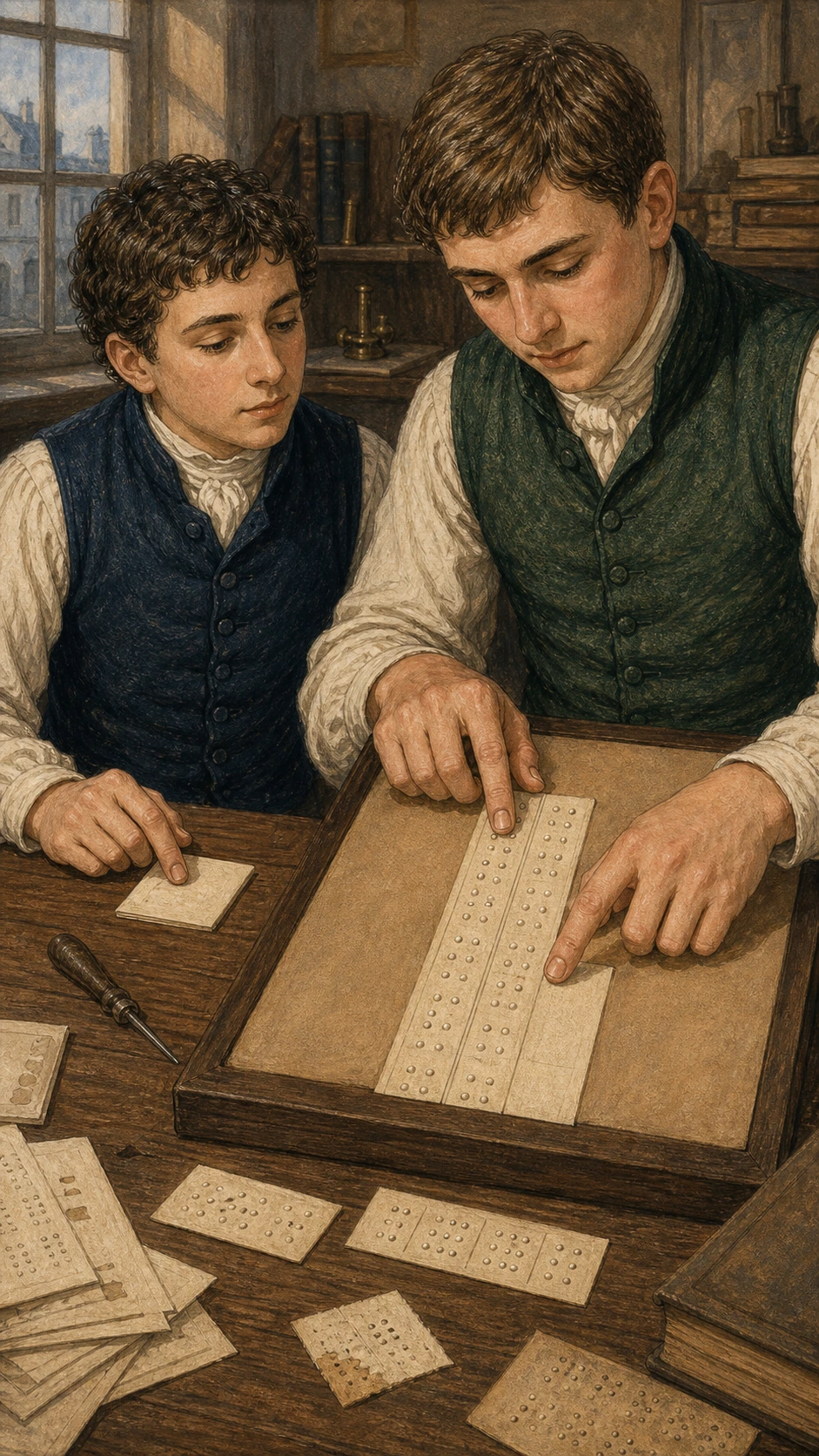
But twelve dots made a tall cell, too long to grasp with one fingertip. By the time a finger checked the top and bottom, the word broke apart. The system also lacked enough signs for punctuation, numbers, and music beyond letters. As Louis used the twelve-dot system, he noticed these difficulties. “If a whole cell fit beneath one fingertip, we could read faster.”
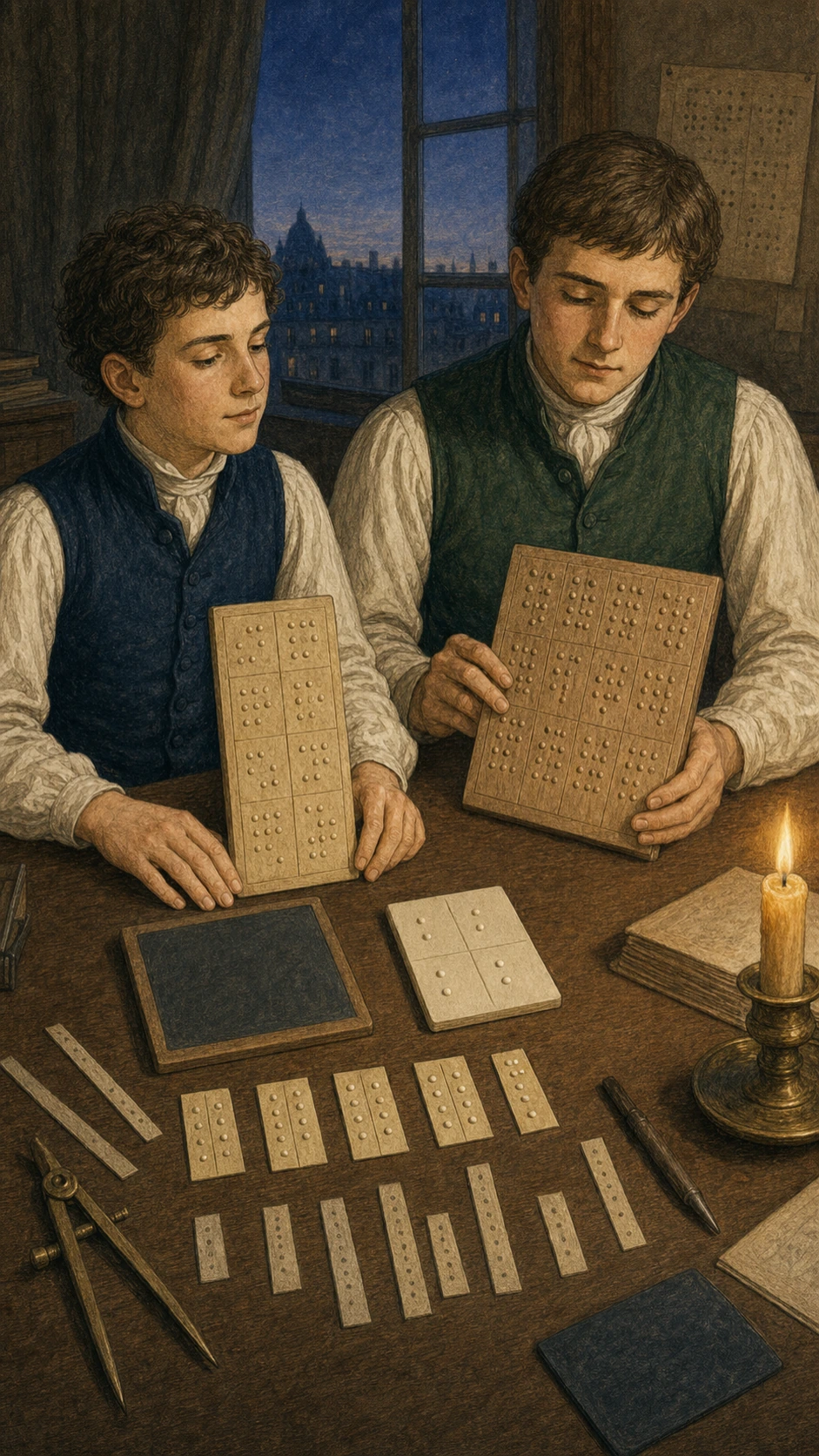
What if twelve became six? Three dots high and two across would fit beneath a fingertip. If combinations of six dots were assigned to letters and other signs, punctuation and numbers could be written too. But Louis would have to use the twelve-dot system as a starting point, rethink the combinations for six dots, and test them again and again. Should they use the twelve dots they have now—or spend years remaking them as six?
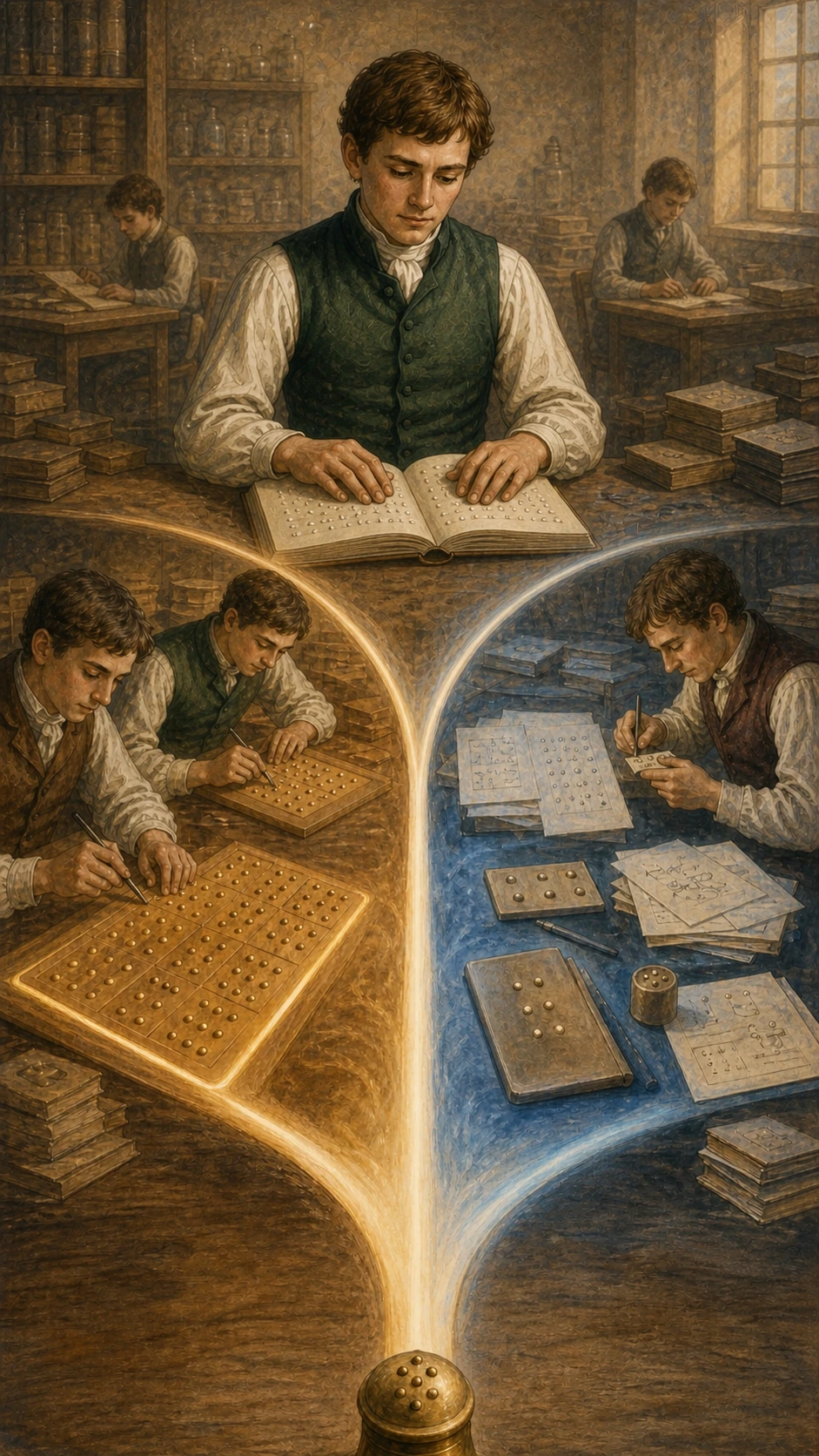
With twelve dots, the students could begin writing today. Even if it was hard to read, writing for themselves was a major step. Six dots might become faster and easier to read—but no one knew whether every combination would work, or whether adults would accept it. Two paths lay before Louis. Which would you choose?
Before revealing the ending, ask your child: “If you were Louis's classmate, which path would you begin with?”
탭하여 고르기
After the story ends
Great lives become a family conversation.
The history of braille is not the story of one genius alone. Louis identified what was difficult to use, classmates used the new writing, and institutions caught up later. This series goes beyond names and achievements: families use period objects and the voices of people around each figure as clues, compare two paths, discuss their reasons, and then confirm the history.
The words and pictures in this story were made using AI.
Lumisia Stories — 혼자서도 함께도, 이야기 시간을 더 자유롭게. · 운영: EISOL LLC (도쿄)